
Science fiction and technology
How do memorable and inspiring science fiction stories that peer into the future of technology emerge?

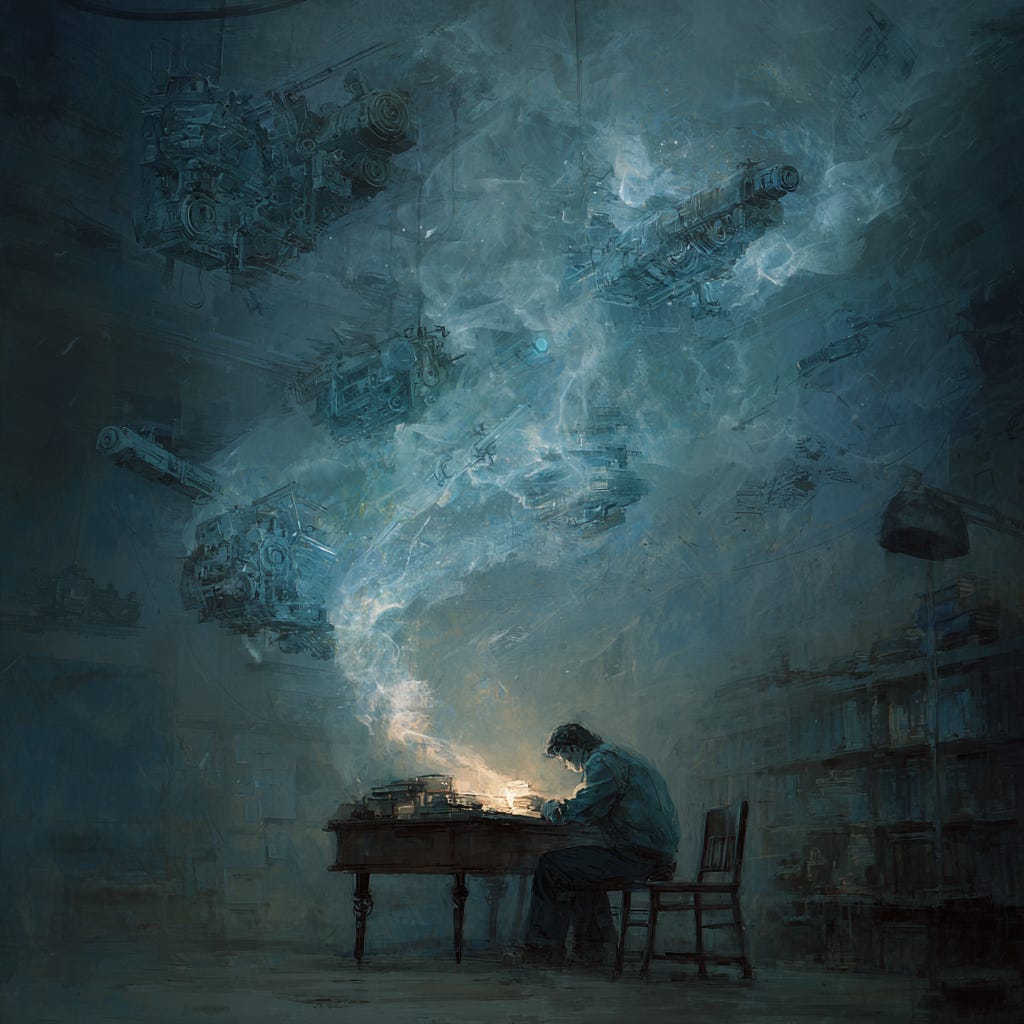
As we race into a future of accelerating technological change, it seems that the yearning for new, positive visions of the future grows by the day. And it is only natural for technologists to look to science/speculative fiction writers, the ones that inspired many of the current generation, to conjure new myths to inspire a new generation to build the world of tomorrow.
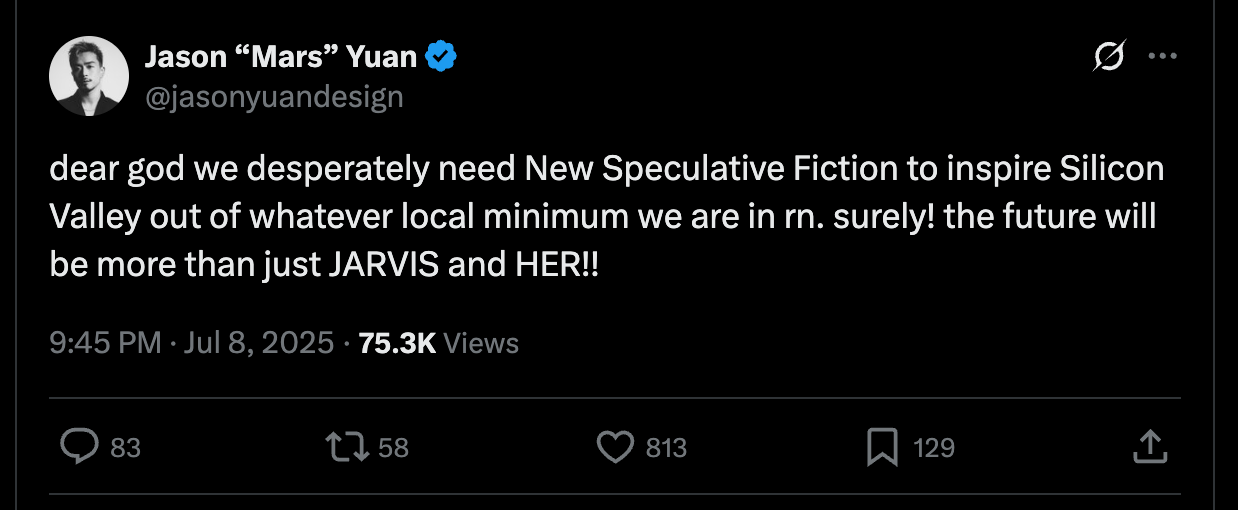
Yes! We need more stories that give us a glimpse of a world that we would want to live in. We need more stories that make us care about a new world shaped by transformative technologies, a world we can plausibly get to.
But, how do more of these stories actually get created? If entire industries are working at hyper speed to develop new technologies that promise to dramatically change how we work, how we communicate and even how we think then surely science fiction writers can imagine the best version of the worlds that could result from their widespread deployment right?
I was tempted by this line of thinking at first and now think that it is flawed.
The reason why was first highlighted for me by a few comments by Neal Stephenson, the author of Snow Crash and Diamond Age, both a part of Silicon Valley literary canon, in a recent panel.
When asked about how AGI affects the way he thinks about the imagined future:
I mean currently I'm just..not doing that...The way I work is to be incredibly focused on whatever my project is at that moment. And at the moment it's not that.
When pushed on why Snow Crash, a cyberspace novel that features many futuristic technologies, did not feature AGI:
I mean it just...in what I do I haven't found a story that I want to tell that involves that. I have nothing against the idea it's just I can only work on one project at a time.
And in response to a remark about the lack of AI in a very out there (for the time period when the novel was written) future with super computers, broken regulation and crypto cities:
It just didn't occur to me. It wasn't what I was doing at the time. The thing was written in about 1989/1990. We didn't even really have the Internet at the time as we know it so the kinds of AI that we talk about today just were so far off in the distance that none of that was relevant to me and the story I wanted to tell.
Stephenson has specific stories he wants to tell and technology is a device to help build out the worlds for those stories, but is not necessarily the seed of the story. The technologists around him may be chattering about the Internet, AI, AGI or whatever is currently in vogue, but if any of the technologies are featured, it is only because the story has a specific use for them. The technology serves the story and not the other way around.
Another writer that takes a similar approach is Ursula Le Guin. She starts her essay "Science Fiction and Mrs. Brown" by echoing novelist Virginia Woolf's statement that great novels emerge from a desire to show a world through a character, a so called Mrs. Brown:
This Mrs. Brown, says Virginia Woolf, is the subject matter of the novel. She appears to the novelist, inside a railway carriage or inside the mind, and she says, Catch me if you can!
The story starts from a blurry, vague image of a character. Perhaps based on a stranger or figure in the real world. Then, everything else emerges out of a deep desire to try to understand this Mrs. Brown character. Who are the people in her life? What is the technology embedded in her life? What is the world that contains her?
For Le Guin, the character is primary:
The writers' interest is no longer really in the gadget, or the size of the universe, or the laws of robotics, or the destiny of social classes, or anything describable in quantitative, or mechanical, or objective terms. They are not interested in what things do, but in how things are. Their subject is the subject, that which cannot be other than subject: ourselves. Human beings.
I suspect that even if you could convince every science fiction writer in the world to think hard about how a specific set of technologies will shape the world this would not result in the most memorable or inspiring stories that galvanize a generation. Instead, they will probably emerge from the Stephensons and Le Guins that start from a place of wanting to understand a person, an aspect of the human condition, a power structure in the future. And if the story does show us what the future could look like as a result of a specific technology it will be an unintentional side effect of building the world to fulfill that desire.